

My creative toolkit
TAJ/ IRC_2026-04: Habits and things that helped me get back into the creative flow
Last Sunday I’ve decided that I want to start writing consistently again, and maybe even work on a longer project. Writing has always been one of my biggest passions, even if unfortunately my academic and personal obligations, and a good dose of insecurity, have led me to dedicate to it less and less time. In my last post, which is an introductory journal entry to this new chapter of the newsletter, I briefly summarised my first experiences in the writing world, and what stopped me from properly cultivating this passion throughout the years. “The Archivist Journal”, which celebrates its first birthday in a few days (!!!), it’s the result of my attempt, that began some years ago, to start writing again. There have been periods in which I’ve been extremely consistent, others in which I only wrote every now and then, and Substack has helped me rebuild a routine, because, since I’ve started this blog, I promised myself to post every week, and I mostly did.
I must say, though, that when I’ve picked up writing again, around 2023, I hadn’t confronted a blank page in a long time. Naturally, I had written, even during the previous years, but mostly because I needed to empty up my head, instead of understanding what was going on inside it. Then, in autumn 2023, I was struck by a story idea. I hadn’t written fiction (what I’ve always liked writing the most) in years, and I couldn’t stop thinking about my piece. This, like one of the first ones I remember “vomiting” on a Word document, was about ghosts, and words would haunt me like the spirits in my story. I wasn’t afraid of running out of ideas, because the more I wrote, the more I had to write. I used to dream of my characters, the music I listened to built the architectures of my world, and really everything would suggest me new sentences, scenes, dialogues.
Now I realise that this spring of imagination actually didn’t appear randomly, after a long drought. I had implemented, unconsciously I guess, a series of strategies that allowed me to be more creative, and after some years, I started writing them down, intentionally experimenting new methods and I ended up with a list of tools and habits, that I like to call “creative toolkit”.
<morning pages>
I must say I haven’t read “The artist’s way” by Julia Cameron, the book that illustrated this method in detail. I’ve tried multiple times but the language and basic theory have never fully resonated with me. However, I’ve heard about the “morning pages” a while ago and, since then, I periodically come back to this habit, which consists in filling up three pages of a notebook (I’m not sure how big this notebook needs to be, but I’ve personally always used an A5) with stream of consciousness journaling, without lifting the pen from the paper, every morning. Especially when I’m stressed, and obligations begin to block my creative process, having a place where I can empty my head out before starting my day, allows me to pay more attention to what surrounds me. Everything can be a source of inspiration, but we must be present enough to see it.
<commonplacing>
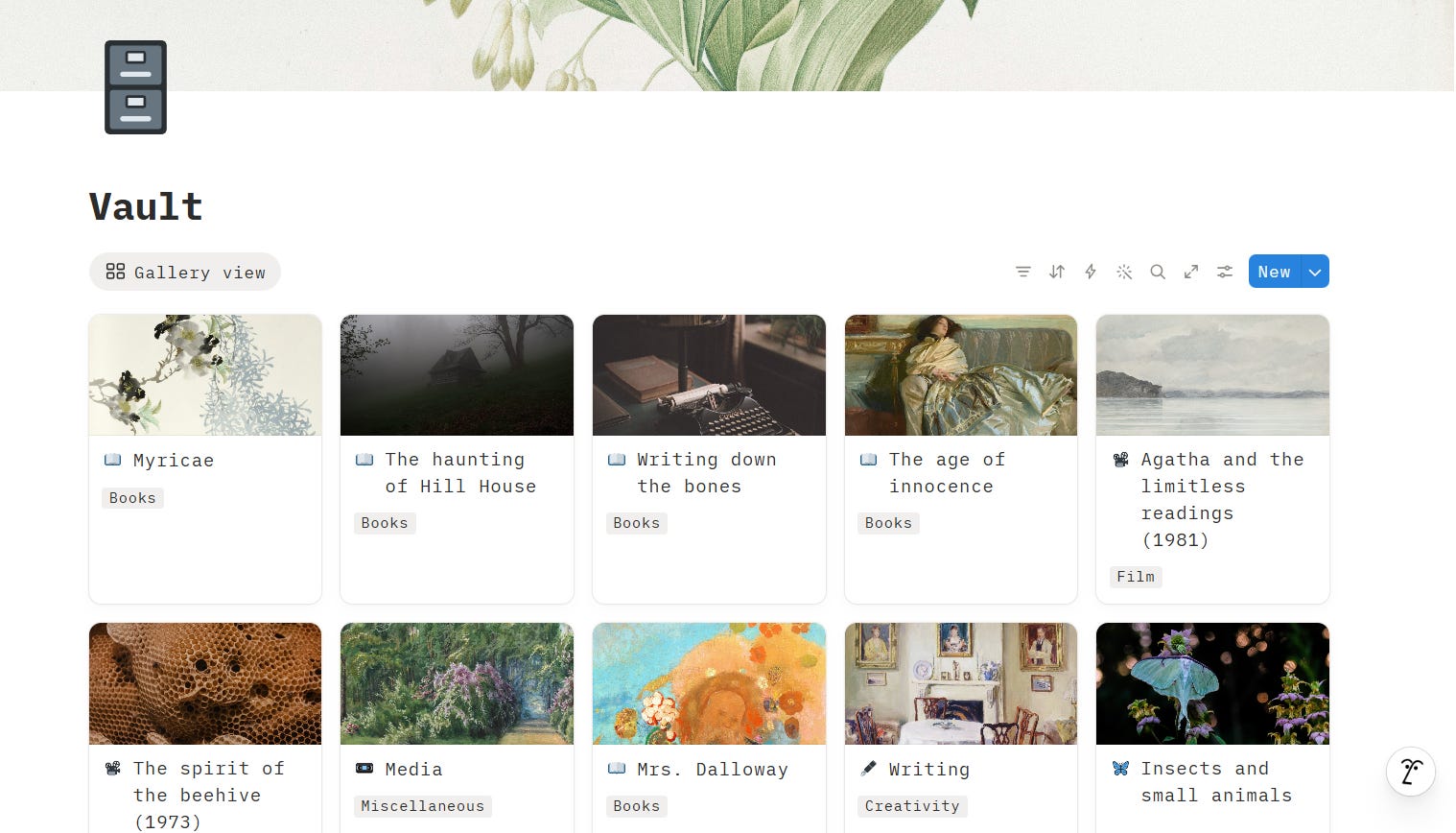
A commonplace book is basically a research notebook. I’ve started one last year, when I decided that I needed a place where to keep all the notes I took from following some interesting rabbit holes, and I’ve recently switched to a Notion page, because it’s easier to keep up. It only takes a phone to learn anything today, from psychology to literature, from medieval history to entomology, a foreign language, the mysteries of the cosmos. I believe research is an essential hobby for a writer, and it can be pleasant and exciting. Sometimes ideas are already out there, you just need to find them.
<reading>
Reading is naturally the only way to learn how to write, also because literature is an endless well of ideas. I’m not scared of taking inspiration from other authors and stories when I write, because writing is a communal act1. When I was younger, I liked to take the characters from my favourite books and throw them all in the same story, out of curiosity, because I loved to imagine the amazement of an 1800s explorer while meeting a 21st century girl with magical powers. Sometimes I would even add my original characters in this eclectic writing exercise, and their interactions with the others would help me better define their personality.
<art & media>
Listening to music, watching films, watching art pieces is fundamental to nurture creativity, as much as reading. In my opinion, it’s also a way to get out of oneself and make the creative process circular: a song, a picture, a film still can suggest an idea that already exist in our mind, which we can shape on the page, after becoming aware of it.
<attention>
Attention is what transforms the mundane into extraordinary. Moments of daily life can turn into a great source of inspiration, because everything is worth writing about. Actually, writing about the mundane has become one of my favourite ways to live more intentionally, and I’ve often shared this on Substack. You can write about anything: about a half-drank coffee, about a documentary on insects, about the spring flowers on the branches of fruit trees.
<boredom>
Unfortunately, sometimes, the only way to recover our creativity is to be bored. I know that there are studies, even if I’m not an expert, on the importance of boredom, and they show how taking a break from daily stimulation, like social media feeds, replenishes the brain with creative energy. That must be why I always get my best ideas when I can’t write them down, while taking a shower or washing the dishes, often also while I study and I shouldn’t be distracted, but this is for another post.
Thanks for reading,
𝒢. 𝒢.
<original in Italian>
Il mio toolkit creativo
TAJ/ IRC_2026-04 : Strumenti e abitudini che mi hanno aiutato a ritrovare l’ispirazione
Domenica scorsa ho deciso che avrei ricominciato a scrivere con costanza, e magari anche a lavorare a un progetto più lungo. Scrivere è da sempre stata una delle mie più grandi passioni, anche se, purtroppo, gli impegni accademici e personali, insieme a una buona dose di insicurezza, mi hanno portato a dedicargli sempre meno tempo. Nel mio ultimo post, che vuole essere una pagina di diario introduttiva a questo nuovo capitolo della newsletter, ho riassunto brevemente i miei primi passi nel mondo della scrittura e cosa mi ha fermata dal continuare a coltivare questa passione durante gli anni. “The Archivist Journal”, che tra pochi giorni compie un anno (!!!), è il risultato di un tentativo di riprendere a scrivere iniziato qualche anno fa. Ci sono stati periodi in cui ero molto costante, altri in cui scrivevo solo ogni tanto, e Substack mi ha aiutato moltissimo a ricostruire una mia routine, perché da quando ho iniziato a pubblicare su questo blog, mi sono promessa di scrivere un post a settimana e ci sono riuscita quasi sempre.
Devo precisare che, però, quando ho ricominciato a scrivere, circa nel 2023, erano anni che non mi confrontavo con la pagina vuota. Avevo, naturalmente, scritto anche negli anni precedenti, ma più per bisogno immediato di svuotare la testa, piuttosto che per comprendere cosa stesse succedendo al suo interno. Poi, nell’autunno del 2023 sono stata fulminata da un’idea per un racconto. Erano anni che non scrivevo narrativa (da sempre, ciò che preferisco scrivere in assoluto) e non riuscivo a smettere di pensare alla mia storia. Anche questa, come una delle prime che ricordo di aver “vomitato” su una pagina di Word, era una storia di fantasmi, e le parole perseguitavano il mio cervello, come gli spiriti il mio racconto. Non avevo paura di restare a corto di idee, perché più scrivevo, più avevo da scrivere. Sognavo i miei personaggi, la musica che ascoltavo costruiva le architetture del mio mondo, e davvero tutto mi suggeriva nuove frasi, scene, dialoghi.
Adesso mi rendo conto che, in realtà, questa fontana di fantasia non era apparsa per caso, dopo anni di siccità. Avevo sviluppato, anche se inconsciamente, una serie di strategie che mi permettevano di essere più creativa, e a distanza di qualche anno, ho iniziato a prenderne nota, a sperimentare consapevolmente altri metodi e ho ottenuto una lista di questi strumenti e abitudini che mi piace definire “toolkit creativo”.
<morning pages>
Confesso di non aver letto “La via dell’artista” di Julia Cameron, il libro in cui questo primo metodo è illustrato nel dettaglio. Ci ho provato più volte ma il linguaggio e la teoria di base non mi hanno per niente convinta. Però ho sentito parlare delle morning pages qualche anno fa e, da allora, torno ciclicamente a praticare questa abitudine, che prevede di riempire tre pagine di un quaderno (non sono sicura di quale misura debba essere, ma personalmente ho sempre usato un A5) con un flusso di coscienza continuo, senza staccare la penna dal foglio, ogni mattina. Soprattutto nei periodi di stress, quando gli impegni iniziano a ostacolare il mio processo creativo, avere un luogo dove svuotare la testa prima di cominciare la giornata, mi rende più libera di prestare a ciò che mi circonda. Qualunque cosa può essere fonte d’ispirazione, ma bisogna essere abbastanza vigili per coglierla.
<commonplace book>
Il commonplace book non è altro che un quaderno di appunti. Ne ho iniziato uno la scorsa estate, quando ho deciso che mi serviva un posto dove riunire le note che prendevo durante le mie ricerche, e recentemente sono passata a una pagina Notion, perché è più facile da aggiornare. Oggi basta un telefono per imparare qualsiasi cosa, dalla psicologia alla letteratura, dalla storia medievale all’entomologia, una lingua straniera, i misteri dell’universo. Per una persona che scrive, credo che la ricerca sia un hobby obbligato, e non per questo meno piacevole e interessante. A volte le migliori idee sono già là fuori da qualche parte, basta scovarle.
<lettura>
Naturalmente, leggere è l’unico modo per scrivere, anche perché la letteratura è un pozzo infinito di idee. Non ho paura di prendere spunto da altri autori e storie quando scrivo, perché dopotutto scrivere è un atto collettivo2. Quando ero più piccola, mi piaceva prendere i personaggi dei miei libri preferiti e gettarli tutti nello stesso racconto, per curiosità, perché amavo immaginare lo stupore di un esploratore del 1800 che conosceva una ragazza del ventunesimo secolo dotata di poteri magici. A volte, inserivo anche i miei personaggi originali in questo eclettico esercizio di scrittura, e le loro interazioni con gli altri mi aiutavano a definire meglio la personalità delle mie creazioni.
<media e arte>
Ascoltare musica, guardare film, osservare opere d’arte è fondamentale per nutrire la creatività, tanto quanto leggere. A mio parere è anche un modo per uscire da se stessi e fare in modo che il processo creativo sia circolare: una canzone, un quadro, la scena di un film suggeriscono un’idea che già esiste nella nostra mente, a cui si può dare corpo sulla pagina, una volta che ci si è accorti di essa.
<attenzione>
L’attenzione è ciò che trasforma l’ordinario in notevole. Momenti di vita quotidiana possono rappresentare un’importante fonte di ispirazione, anche perché penso che non ci sia niente di cui non valga la pena scrivere. Anzi, scrivere del quotidiano è diventato uno dei miei modi preferiti per vivere più consapevolmente, e l’ho spesso condiviso anche su Substack. Si può scrivere di tutto: di un cappuccino bevuto a metà, di un documentario sugli insetti, dei fiori degli alberi da frutto in primavera.
<noia>
Purtroppo, a volte, l’unico modo per essere creativi è essere annoiati. So che ci sono studi sull’importanza della noia, anche se non sono un’esperta, che dimostrano come periodi di pausa dagli stimoli quotidiani, come i feed dei social media, restituiscano al cervello l’energia per escogitare nuove soluzioni. Dev’essere per questo che ho sempre le migliori idee quando non posso scriverle, sotto la doccia o mentre lavo i piatti; spesso anche quando studio e non ho tempo per distrarmi, ma questo potrebbe essere l’argomento di un altro post.
Grazie per la lettura,
𝒢. 𝒢.
Hello! I’m 𝒢. 𝒢., a 20-something year old master student in Italy, aspiring archivist and writer. Here I archive my life through writing about the mundane and collecting pieces of media. This post falls under my “Intermediate Records” series, which includes media collections, writing guides and learning resources.
Related posts
How to become the archivist of your own life

It’s truly striking to think that most times I can’t remember what I had for dinner the day before, or how was the weather on this same day a week ago, what I was daydreaming about on my last train ride, or which locations I visited in order this past August on vacation. My poor memory might just be a personal issue, but I feel like people relate to thi…
Destimulation rituals

I guess some people bloom in the spring, taking the time to make their way through the damp soil in March and growing leaves and petals in April. But the ever-changing weather forecasts and some other factors that I’m still not able to pinpoint, make spring a challenging period for me. The only thing that seems to defrost during this time of the year is…
My Pinterest
Natalie Goldberg, Writing down the bones. Of course, taking inspiration is not the same copying and not not giving due credit; I absolutely don’t support that.
Natalie Goldberg, Scrivere zen. Naturalmente, prendere ispirazione non significa copiare senza attribuzione il lavoro degli altri.
"I liked to take the characters from my favourite books and throw them all in the same story, out of curiosity, because I loved to imagine the amazement of an 1800s explorer while meeting a 21st century girl with magical powers."
This is such a cool idea. I mean.... maybe lots of other writers do this, but I have never had this idea and it sounds great 🙂 (but I'm not a writer - only a reader....)