

A glimpse into archives
What I study

In order to transcend the limits of time, space, and the fragile nature of human memory, societies depend on archives.1
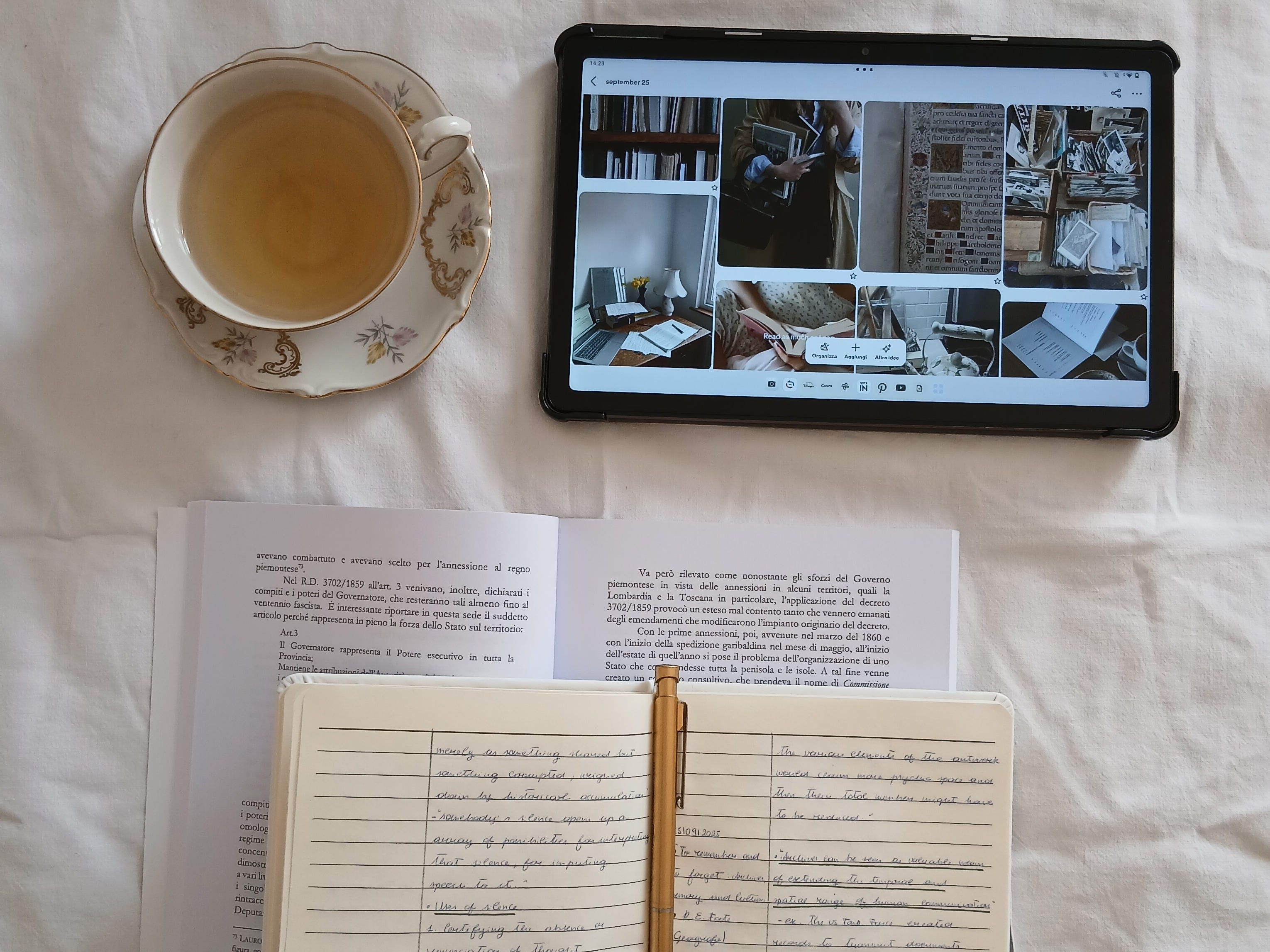
Movies, books and tv series often depict archives as dark, desolate places, full of shelves, overflowing with dusty papers and heavy binders; they’re seen as some storage for useless documents and the house of insects and rats. But archives hold the memory of the world and archivists often hold the power to decide what will be remembered and what will forever be forgotten. There could be no historical narration without the primary sources, the documents stored in archives.
What is an archive?
This apparently banal question has challenged experts for a very long time. One of the first modern definitions of archives appears at the end of the 20th century (even though, archives and archival theory are much older) and is elaborated by three dutch archivists, who wrote a manual for the organisation and preservation of archives:
The archive is the whole complex of writings, drawings and prints, officially received or drafted by any authority or administration, or by any employee of these, as long as said documents, according to their function, should remain by the same authority.2
The last part of this definition is particularly interesting, because it preaches one of the fundamental principles of archival theory, the principle of provenance, according to which, an archive should not be moved away from the place where it was created. Of course, there are some exceptions, and in case of risk for the preservation of the documents, the archives can be moved but they should stay as close as possible to their original location, because the transfer of documents from one place to another can cause the loss or damage not only of the papers themselves, but also of what is known as “Respect des fonds”, in French, or “vincolo archivistico”, in Italian (English normally uses the french definition, but I think the italian terminology is useful in this case). The idea is that every document in archive is related to each other, and getting rid of a document, altering it or organising the archive in a wrong way (by subject, for example) eventually destroys this link. The archive is born perfect and it’s to be maintained as such. The link between the documents is natural (stemming from the activity of the creator) and necessary (without it, the archive doesn’t exist).

The italian term translates as “archival bond” and was first theorised by Giorgio Cencetti (1937), who defines the archive like this:
The archive is the complex of documents sent and received by an institution or person for the achievement of their goals or for the exertion of their functions.3
It is, thus, fundamental when exploring or organising an archive, not only to be familiar with archival theory and practice but also with the history and structure of the institution who produced said archive.
Another definition was given by the english archivist, Hilary Jenkinson, the same year as Giorgio Cencetti.
A document which may be said to belong to the class of Archives is one which was drawn up or used in the course of an administrative or executive transaction (whether public or private) of which itself formed a part; and subsequently preserved in their own custody for their own information by the person or persons responsible for that transaction and their legitimate successors.4

According to Jenkinson, the archival document have four basic characteristics:
Impartiality: documents can’t tell anything but the truth, because they were made to serve specific functions in the context where they were drafted;
Authenticity: unless custody has been violated, we can assume documents are free from prejudices;
Naturalness: the accumulation of documents happens ia a direct consequence of the exertion of functions by the institution the archive belongs to;
Interrelation: every document is linked to the other.
So, archival documents not only can be considered primary sources for historical research, but they also hold judicial power. The principles of archival theory, indeed, can be found in the Roman Law, even if archival theory was born in the eleventh century and refined by medieval glossarists. Two main characteristics of the archival documents, according to Roman Law, are:
Perpetual memory: not so much the idea that every single archival document, or its content, it’s supposed to be remembered forever but the meaning is closer to the abovementioned principle of provenance. As Duranti says, the principle of perpetual memory “was meant to carry with itself no obligation of eternal preservation, but only an implication of trustworthiness.”
Public faith: it was granted in ancient Rome, because “only public authorities could have archives”5

Since the documents stored in archives are reliable and trustworthy, archives can’t be seen as places of dusty shelves and forgotten, yellowish papers; but the places where history is made.
Control of the archive – variously defined – means control of society and thus control of determining history’s winners and losers.6
Thanks for reading,
𝒢. 𝒢.
Related posts
How I craft a monthly curriculum

A month ago, I posted my first self-study guide and to this day it’s still my most appreciated post. Recently I came across the “personal” or “monthly curriculum” trend here on Substack, and as someone who loves learning, I couldn’t not research it and try it out for myself. In this post I’m sharing my process in crafting a monthly curriculum as well as…
Follow me on Instagram: @thearchivistjournal


Carter R. (2006), “Of Things Said and Unsaid: Power, Archival Silences, and Power in Silence”, Archiviaria 61(September), p. 222.
S. Muller, J. A. Feith, R. Fruin (1898), Handleiding voor het Ordenen en Beschrijven Archieven, Groningen, from Romiti A. (2020), Archivistica Generale. Primi elementi, Civita Editoriale, Lucca, p. 154.
Cencetti G. (1937), Sull’archivio come Universitas rerum, Roma.
Jenkinson H. (1937), A manual of archive administration, Humphries & co., London.
Duranti L. (1994), “The concept of appraisal and archival theory”, American Archivist, 54, p. 328-344.
Schwartz J. M., Cook T. (2002), “Archives, Records, and Power: The Making of Modern Memory”, Archival Science, 2, p. 1-19.
This is so interesting! I’m an MLIS candidate but specializing in youth services. My department also has an archivist track and I’ve been considering taking one of their intro courses. I had no idea there was so much theory behind an archive!
I'm writing a creative piece featuring an archivist and this is such a beautifully written piece and so useful, thanks so much for writing :)